


Seasonal Home Care Guide for Better Oversight
- Eric Price
- 5 days ago
- 6 min read
A home can look fine from the street and still be developing a problem you would never catch from a distance. That is why a seasonal home care guide matters most when the property is not under your regular day-to-day observation. For second homes, seasonal properties, and temporarily unattended residences, the real issue is not just maintenance. It is knowing what is happening at your home - without being there.
For many homeowners in South Jersey, the risk changes with the calendar. Summer brings humidity, storms, and heavy exterior wear. Fall introduces leaf buildup and drainage concerns. Winter raises the stakes with freeze-related issues and weather exposure. Spring often reveals what colder months hid. A smart approach is not to react to each season as it arrives. It is to build a repeatable pattern of property oversight that keeps visible conditions documented and communication consistent.
Why a seasonal home care guide matters
Seasonal care is not just a reminder to handle upkeep. It is a way to reduce uncertainty when a property is vacant, occupied only part-time, or in transition. If you are traveling often, living elsewhere for part of the year, overseeing a family member's home, or waiting on renovation or sale activity, small visible issues can go unnoticed until they become expensive or disruptive.
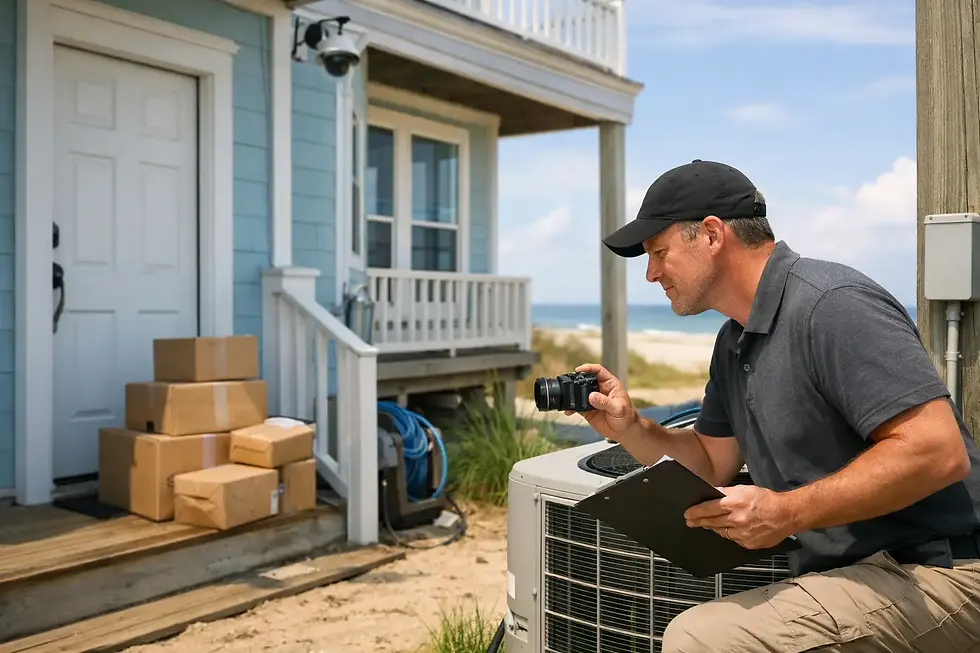
The practical value of a seasonal home care guide is accountability. Instead of wondering whether the home still looks secure and properly maintained, you create a system for observation. That system works best when it includes scheduled on-site visits, visible condition verification, and written homeowner reporting with photo documentation.
That last part matters. Homeowners do not just need reassurance. They need information they can act on.
Spring: reset after winter exposure
Spring is when many property problems first become visible. Freeze-thaw cycles may have affected exterior surfaces, drainage paths, trim, walkways, or other visible elements. Debris can accumulate in ways that change how water moves around the home. Even when no major damage is present, the property may show early signs of wear that deserve attention before the rainy season and summer humidity add more pressure.
For unattended or seasonal homes, spring oversight should focus on what winter left behind. Are there visible signs of water intrusion from the outside? Does the exterior appear secure? Are entry points, windows, and doors showing any noticeable concerns? Is the property presenting as expected after months of colder weather and lower occupancy?
This is also the season when many homeowners begin preparing a second home for more frequent use. That transition is smoother when someone is documenting visible conditions before the home becomes active again. If something appears off, you can address it early rather than discovering it when guests arrive or when your own schedule is already full.
Summer: high activity, weather exposure, and vacancy gaps
Summer creates a different kind of risk. In shore communities and seasonal areas, homes may see periods of use followed by stretches of vacancy. The property can go from occupied to unattended quickly, and those transitions matter. Exterior wear often accelerates in heat, humidity, and storm season, especially if no one is regularly observing the home.
A seasonal home care guide should treat summer as a visibility season. This is the time to confirm that the home's exterior condition remains consistent, that no storm-related changes are evident, and that the property continues to present normally between visits or occupancy periods. If a home is left unattended after a busy holiday week or between owner stays, structured oversight helps close the gap.
There is also a practical communication issue in summer. Homeowners are often traveling, balancing work, or coordinating multiple properties and family schedules. They do not want vague updates. They want direct reporting that confirms what was observed, what looked normal, and what may need follow-up. Good oversight reduces mental clutter because it replaces guessing with documented information.
Fall: prepare before winter, not after it starts
Fall is often underestimated because the weather may still feel manageable. But from a property oversight standpoint, it is one of the most important seasons of the year. Leaves, shifting temperatures, reduced occupancy, and approaching winter conditions all combine to create a short window for preparation.
This is the season to pay close attention to visible drainage patterns, accumulated debris, exterior presentation, and general readiness for colder weather. A home that appears fine in early fall can become vulnerable by late fall if small visible concerns are ignored. That is especially true for homes that will not be closely watched every week by the owner.
For many South Jersey homeowners, fall is also the point when a seasonal residence becomes less active. Once usage declines, oversight should become more intentional, not less. Fewer owner visits usually means fewer opportunities to notice early changes. Scheduled monitoring helps maintain continuity when your own presence becomes less frequent.
Winter: the season when visibility matters most
Winter is where informal observation tends to fail. Neighbors are indoors. Owners travel less frequently. Exterior issues can develop quietly, and weather conditions can limit how quickly a problem gets noticed. For vacant or temporarily unattended homes, this is when documented property oversight provides the most peace of mind.
Winter monitoring is not about making assumptions about hidden systems. It is about confirming visible conditions at the property and identifying anything that appears unusual from an exterior and accessible observational standpoint. A professional reporting process helps homeowners understand what is being seen on-site rather than relying on silence as proof that everything is fine.
That distinction is important. No update is not the same as a verified condition update. In winter especially, homeowners benefit from clear communication that confirms the home was observed and that the visible condition was documented at a specific point in time.
A better approach than seasonal reminders alone
Many homeowners already know the basic seasonal tasks associated with homeownership. The challenge is not awareness. The challenge is consistent follow-through when life pulls your attention elsewhere.
That is why the best seasonal plans are built around oversight, not memory. Calendar reminders can help, but they do not replace on-site observation. A dependable oversight process gives homeowners something more useful than a checklist. It gives them current information, photographic documentation, and a written record of what the property looked like during each scheduled visit.
There is also an important trade-off here. Some homeowners only want support during obvious high-risk periods such as winter or storm season. Others benefit from year-round continuity because seasonal transitions themselves are when conditions often change. The right cadence depends on occupancy patterns, location, weather exposure, and how often the owner can personally observe the home.
What homeowners should expect from seasonal property oversight
A professional seasonal oversight service should feel structured, not casual. The value is not simply that someone visited the property. The value is that the visit follows a process, the observations are documented, and the homeowner receives clear reporting afterward.
That reporting should answer practical questions. Was the property visibly in order? Did the exterior present as expected? Were there any noticeable changes since the last visit? Was photo documentation provided so the homeowner can see what was observed rather than relying on a general statement?
This is especially useful for homeowners managing second homes, family properties, homes in probate, residences between occupants, or houses in transition due to relocation or renovation. In all of these situations, the same need comes up again and again: reliable oversight with proof.
In South Jersey, where many homes shift in use by season, that proof becomes even more valuable. Weather patterns, coastal exposure, and irregular occupancy can create long gaps in owner visibility. A documented oversight process helps close those gaps in a professional way.
Seasonal home care guide for peace of mind
The strongest seasonal plan is the one that keeps you informed before uncertainty turns into stress. A seasonal home care guide should not leave you with more tasks to remember. It should help you build a dependable rhythm of observation and reporting so you know the home's visible condition throughout the year.
When that rhythm is in place, seasonal changes feel more manageable. You are no longer relying on assumption, delayed discovery, or secondhand impressions. You have a clearer picture of what is happening at the property and a record to support decisions when attention is needed.
That is what real peace of mind looks like for an unattended home - not hoping nothing has changed, but knowing someone qualified is consistently verifying what can be seen and telling you exactly what they found.


Comments