

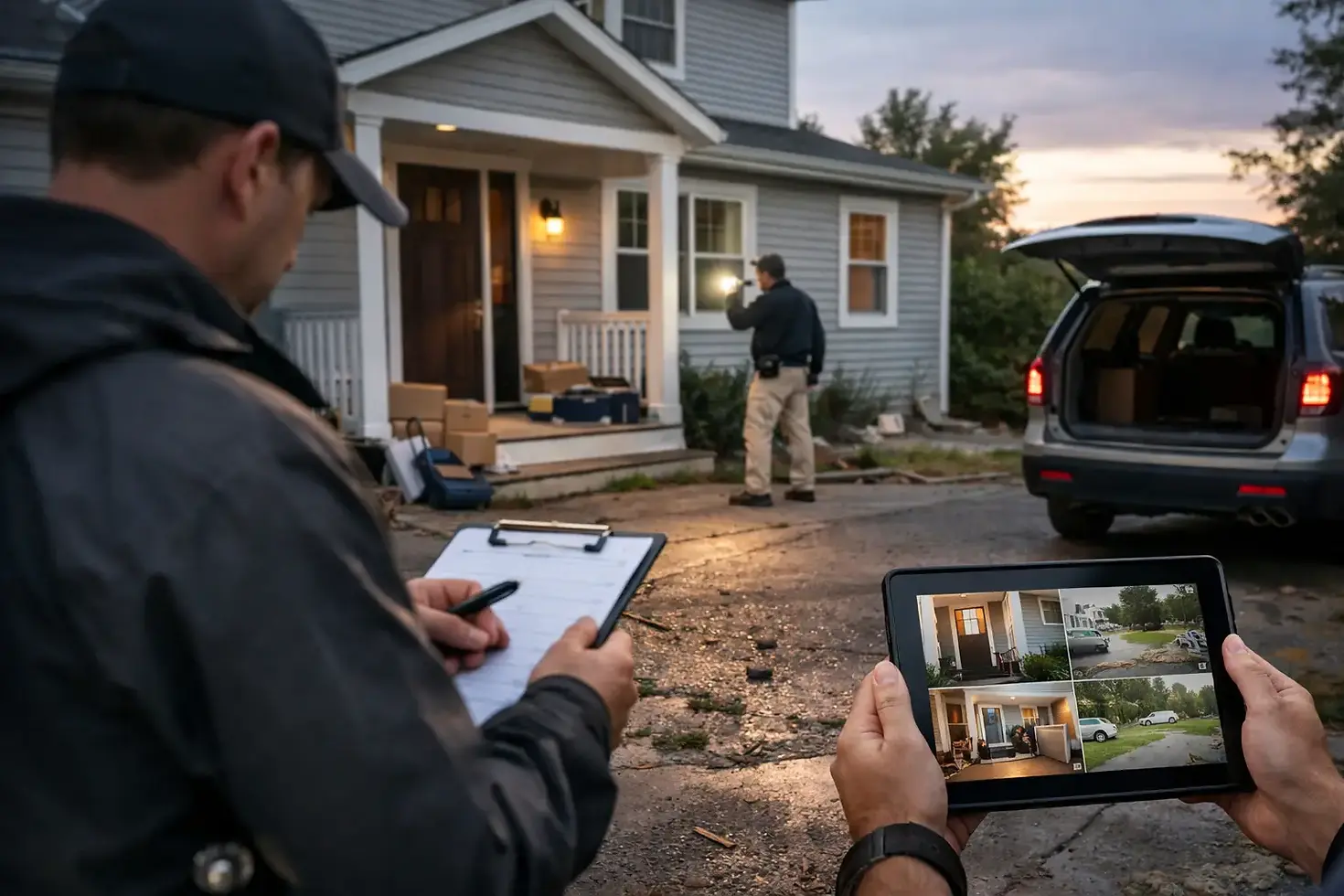
How Professionals Monitor an Empty House
- Eric Price
- Apr 30
- 6 min read
An empty house rarely stays "fine" just because the doors are locked. A loose gutter, a small leak, a tripped breaker, or storm debris in the wrong place can sit unnoticed for days or weeks when no one is actively checking the property. If you are figuring out how to monitor an empty house, the real goal is not occasional reassurance. It is having dependable, documented confirmation that someone is observing the property consistently and communicating what they find.
That distinction matters more than most homeowners expect. When a home is unattended because of travel, seasonal use, relocation, probate, renovation, or a temporary vacancy, problems do not become serious because they are complicated. They become serious because no one sees them early.
What monitoring an empty house should actually accomplish
A lot of homeowners start with a simple question: does someone just need to stop by now and then? In practice, that approach leaves too much to chance. Effective oversight should give you a clear picture of the home's visible condition over time, not a vague sense that someone was in the area.
If you want to monitor an empty house properly, you need three things working together: scheduled observation, documented reporting, and consistent communication. Scheduled observation means the property is checked on an established cadence rather than only when someone remembers. Documented reporting means you receive written updates and photo-backed confirmation of what was observed. Consistent communication means you are not left wondering whether the visit happened or what condition the property was in afterward.
This is especially important for second homes, inherited properties, homes in transition, and seasonal residences in South Jersey communities where weather exposure, vacancy periods, and owner distance can all increase risk.
How to monitor an empty house without relying on guesswork
The most reliable approach is structured third-party oversight. That means arranging recurring on-site visits focused on visible condition verification of the exterior and any accessible interior areas, followed by written status updates and photos. It is a practical system because it turns uncertainty into a record.
Without that structure, homeowners often piece together coverage from scattered efforts. One person drives by occasionally. Another notices something only if it looks obvious from the street. Someone else texts that everything "looks good." The problem is not that these efforts are well-intentioned. The problem is that they are inconsistent, undocumented, and difficult to rely on when details matter.
A professional oversight process is different because it is built around repeatability. You know when the property is being checked, what kind of visible conditions are being observed, and what kind of reporting you will receive afterward. That creates accountability and reduces the chance that a developing issue goes unnoticed.
Why scheduled visits matter more than random check-ins
Random visits can create blind spots. If the property goes unobserved for long stretches, a minor condition can worsen before anyone realizes there is a problem. Scheduled monitoring sessions help narrow that gap.
How often those visits should happen depends on the property and the situation. A vacant home awaiting sale may need a different schedule than a shore property used seasonally or a family home left unattended during extended travel. Weather season, prior maintenance history, and how accessible the owner is also play a role.
There is no single perfect frequency for every home. What matters is choosing a schedule that reflects real-world exposure and then sticking to it.
Why documentation changes everything
When homeowners are away, memory is not enough. Documentation provides a record of observed conditions at a specific point in time. That is useful for peace of mind, but it also helps with decision-making.
A written update with photos gives you more than a simple all-clear. It shows that the monitoring session occurred, what was visible during the visit, and whether any changes were noted. If something needs attention, you are working from a clear report rather than a vague impression.
This becomes especially valuable when a property is in transition. If you are overseeing a parent's home, managing a residence during relocation, or keeping watch over a vacant property between occupants, written reporting helps everyone involved stay on the same page.
What to look for during empty house monitoring
The purpose of monitoring is early issue awareness, so the focus should stay on visible property conditions that can change between visits. Outside, that may include signs of storm impact, drainage concerns, exterior damage, open access points, or anything that suggests the property is not secure or not weathering conditions as expected.
Inside accessible areas, the concern is usually not deep technical diagnosis. It is visible confirmation. Are there signs of water where there should not be? Has anything changed in appearance since the last visit? Does the interior show an obvious condition that requires follow-up? Professional oversight works well because it stays grounded in observation and reporting rather than assumptions.
That observational mindset matters. It is one thing for someone to say the home seemed okay. It is another to have someone who is trained to notice visible changes and report them clearly.
Technology can help, but it should not be your only plan
Many homeowners assume cameras, alarms, and smart devices solve the problem. They can help, but they are not a complete monitoring strategy on their own.
Technology is useful for alerts, access awareness, and remote visibility. The trade-off is that devices only tell you what they are designed to detect, and they can create false confidence. A camera may not show a developing exterior issue on the far side of the house. A sensor may not explain whether a visible condition is minor or urgent. A low battery, connectivity failure, or missed alert can also leave you with less coverage than you thought you had.
That is why physical observation still matters. A person on-site can see context that devices miss. They can verify visible conditions, notice changes from prior visits, and provide documented updates that make sense to the homeowner.
For many properties, the strongest approach is a combination of both. Use technology where it adds value, but support it with scheduled on-site oversight so you are not depending entirely on screens and notifications.
When informal monitoring is not enough
There are situations where casual help stops being appropriate. If the property will be unattended for an extended period, if multiple family members need updates, if the home is in probate or transition, or if you simply need proof of regular observation, informal arrangements often fall short.
The issue is not goodwill. It is accountability. Homeowners want to know that someone qualified is showing up on schedule, observing the property carefully, and documenting what they see in a professional way. That need is common among seasonal homeowners, retirees, traveling professionals, and families responsible for homes they cannot visit regularly.
In those cases, a structured oversight service provides something more dependable than occasional reassurance. It gives you an established process.
Choosing the right monitoring approach for your property
If you are deciding how to monitor an empty house, start by looking at the property's actual risk profile. Think about how long it will be unattended, what weather exposure it faces, whether the home has had prior issues, and how quickly you could respond if something changed.
Then consider what kind of communication you need. Some homeowners only want to know if a visible issue appears. Others want a written status update after each visit so they have consistent records. If several decision-makers are involved, clear reporting becomes even more important.
This is where a professional oversight model stands out. Instead of relying on assumptions, you receive scheduled visits, visible condition verification, photo-documented reporting, and written updates that help you stay informed from a distance. For homeowners in Atlantic and Cape May County communities, where seasonal occupancy and travel-related vacancy are common, that kind of structure can make a significant difference.
Next Day Property Oversight is built around that exact need: helping homeowners know what is happening at their home without being there. The value is not just that someone checks the property. The value is that the process is documented, consistent, and communicated clearly.
How to monitor an empty house with less stress
The best monitoring plan is the one that removes uncertainty before uncertainty becomes expensive. That usually means moving away from casual, uneven coverage and toward a repeatable system with clear reporting.
You do not need a complicated setup. You need regular observation, a reliable record of what was seen, and prompt communication when visible conditions change. When those pieces are in place, the home is not being left to chance.
If your property will be sitting empty, peace of mind comes from knowing someone is paying attention with purpose, not just passing by.


Comments