

Storm Damage Monitoring for Vacant Homes
- Eric Price
- May 10
- 5 min read
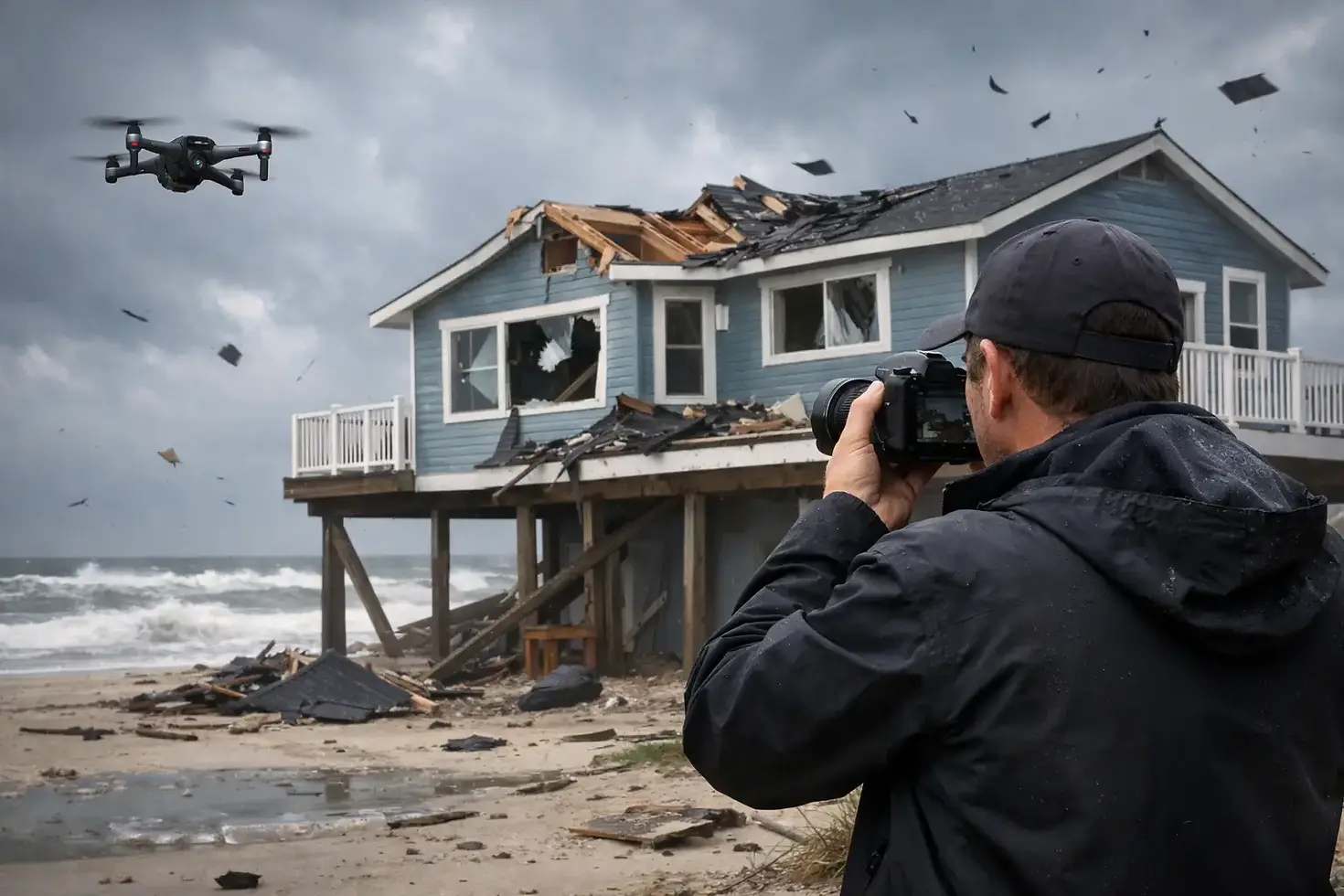
A coastal storm does not wait for your next visit. If your property is vacant for part of the year, even a short stretch of wind, rain, or debris impact can leave visible damage that goes unnoticed far longer than it should. That is why storm damage monitoring for vacant homes matters - not as a convenience, but as a practical way to stay informed when you are not nearby to see conditions for yourself.
For many homeowners, the real concern is not only the storm itself. It is the delay afterward. A missing shingle, a damaged gutter, a loose section of siding, or standing water near an entry point may seem minor at first glance, yet the longer those conditions sit unnoticed, the more expensive and disruptive the outcome can become. Vacant properties are especially vulnerable because there is no daily pattern of observation to catch a visible problem quickly.
Why vacant homes face higher storm risk
An occupied home benefits from routine awareness. Someone notices a branch down in the driveway, a fence panel leaning, or water staining that was not there yesterday. A vacant property does not have that advantage. After a storm passes, damage can remain visible from the exterior while days or weeks go by before the owner sees it.
That timing gap matters. Storm-related issues often start with something small and visible. Roof edges can lift. Exterior trim can loosen. Pooling water can collect where drainage changed during heavy rain. Screens can tear, shutters can shift, and doors or windows can show signs of impact. Not every visible issue becomes a major loss, but every delayed response increases uncertainty.
For seasonal homes, second homes, inherited homes, and properties in transition, the challenge is the same. You need timely, documented information from someone who is not guessing, not casually stopping by, and not relying on memory. You need structured oversight and clear reporting.
What storm damage monitoring for vacant homes should include
Effective storm damage monitoring for vacant homes is not about dramatic claims or technical overreach. It is about visible condition verification after weather events and during scheduled monitoring visits, followed by documentation the homeowner can actually use.
A professional oversight visit should focus on what can be observed clearly and consistently from the exterior and accessible areas of the property. That may include visible roofline concerns from ground level, siding displacement, gutter separation, damaged soffits, broken glass, fencing damage, fallen limbs, drainage concerns, exterior standing water, mailbox damage, and signs that an entry point may have been affected.
Just as important as observation is communication. Homeowners should receive written updates that explain what was observed in plain language, along with date-stamped photos that provide accountability. When a property owner is in another state, traveling for work, or managing a family home during probate or renovation, that kind of reporting replaces uncertainty with something concrete.
The value is not in promising to diagnose every condition. It is in confirming what is visibly present, documenting it accurately, and helping the homeowner understand whether follow-up may be needed.
Documented homeowner reporting changes the situation
After a storm, many owners feel the same pressure. They want answers quickly, but they do not want vague reassurance. "Everything looks okay" is not enough when you are responsible for a vacant property.
Documented homeowner reporting creates a record. It shows that the property was monitored, when it was monitored, and what visible conditions were present at that time. That matters for decision-making. If a homeowner needs to contact a contractor, coordinate with insurance, or simply determine whether the situation can wait, a written report with photos is far more useful than a casual verbal update.
It also supports consistency over time. If one visit notes no visible concerns and a later visit identifies storm-related exterior damage, the homeowner has a clearer timeline. That kind of accountability is especially valuable for properties that are unattended between visits or located in weather-exposed shore areas of South Jersey, where high winds and heavy rain can change conditions quickly.
Visible condition verification is about speed and clarity
There is a tendency to think storm response only matters when severe damage is obvious. In practice, many costly problems begin with conditions that are easy to miss from a distance or only become serious after another round of weather.
Visible condition verification helps homeowners act sooner. A displaced downspout can affect drainage. A section of loosened fascia can worsen in the next wind event. Debris accumulation near an access point can hide another issue. Even if the first report does not indicate major visible damage, that confirmation has value. It tells the owner the property was observed and gives them a factual basis for next steps.
That does not mean every home needs the same level of monitoring after every storm. It depends on the property, its exposure, its vacancy pattern, and the season. A shore property may need closer post-storm attention than a home set farther inland. A property already in transition may warrant more frequent oversight than one that is vacant only briefly. Good oversight accounts for those differences rather than treating every home the same.
What homeowners should expect after a storm
The strongest oversight services set expectations clearly. Homeowners should know what type of visible review will occur, what kind of documentation they will receive, and how communication will be handled if a concern is observed.
That structure matters because storm situations create anxiety. If you are away from the property, you do not want to wonder whether anyone has actually seen it yet. You want dependable communication, not a vague promise to "keep an eye on things." A scheduled and professional property oversight approach is more reassuring because it is built around reporting, not assumptions.
For example, if exterior observation shows a fallen tree limb near the structure, visible gutter damage, and standing water along one side of the home, the homeowner should receive prompt written communication that identifies those conditions clearly. If no visible storm damage is observed, that should be stated just as plainly. Both outcomes are useful because both reduce uncertainty.
Storm exposure in South Jersey makes oversight more practical
Homeowners in Atlantic County and Cape May County know that weather risk is not limited to one season. Coastal wind, heavy rain, tropical systems, and winter storms can all affect vacant homes differently depending on location and property condition. Homes near the shore often face greater exposure, but inland properties are not exempt from drainage issues, debris impact, or weather-related exterior damage.
That local reality is why structured property oversight is not an abstract service. It is a practical response to a known problem. When a homeowner cannot routinely observe the property, someone qualified should be documenting visible conditions and communicating them clearly.
For owners of second homes, seasonal residences, and temporarily unattended homes, this is often the difference between staying ahead of a problem and learning about it much later than they should have.
Choosing a storm damage monitoring approach that fits the property
Not every homeowner needs the same monitoring rhythm. Some want routine scheduled oversight with added attention after major weather. Others need support during a temporary vacancy caused by relocation, renovation, sale preparation, or extended travel. The right approach depends on how often the property is unoccupied, how exposed it is to weather, and how quickly the owner can respond if something changes.
What should not change is the standard for communication. The homeowner should receive timely updates, photo documentation, and a clear written account of visible conditions. That is what turns oversight into a dependable process rather than a vague promise.
Next Day Property Oversight serves homeowners who want exactly that kind of accountability - clear observation, documented reporting, and dependable updates when they cannot be there themselves.
When a storm moves through and your home is sitting vacant, peace of mind does not come from hoping nothing happened. It comes from knowing what was observed, when it was observed, and what you need to do next.


Comments